
Spot Roof Damage From the Ground: Shingles & Flashing
21 October 2026
You do not need to climb a two-story ladder to figure out if your roof took a beating in the latest storm. Armed with nothing more than a pair of binoculars and a good vantage point from your driveway, you can spot the major warning signs of missing shingles and leaky flashing before they turn into costly interior water damage. Knowing exactly what to look for is the first step in protecting your property.
The storm sirens have finally gone quiet across Edmond. The heavy rain has moved on toward Tulsa, and the morning sun is out. You walk out your front door, step onto the driveway, and look up at your house. You know the wind was howling last night, and you heard the distinct thud of hail hitting the roof. Your immediate instinct might be to drag the ladder out of the garage to get a closer look. Leave the ladder where it is. Walking on a potentially damaged, slippery roof is incredibly dangerous and can actually cause more damage to weakened asphalt shingles.
You can perform a highly effective preliminary roof inspection with your feet planted firmly on the grass. You just need to know where your eyes should go and what anomalies indicate a serious problem.
The Driveway Binocular Sweep
The most effective tool for a homeowner assessing roof damage is a standard pair of bird-watching or hunting binoculars. Standing across the street or at the far edge of your property gives you the best angle to view the slopes of your roof.
Start by scanning the entire surface for uniformity. A healthy asphalt shingle roof has clean, straight lines and an even color texture. When you look through your binoculars, you are searching for disruptions in that pattern. High winds common to the Oklahoma City metro area frequently catch the edges of older shingles and rip them clean off the roof deck. From the ground, this looks like dark, uneven patches where the underlayment is exposed to the elements.
Sometimes the shingles are not completely missing but have sustained severe wind damage. Look for horizontal lines running across the top third of the shingle tabs. This indicates that the wind lifted the shingle, bent it backward, and dropped it back down. This creasing breaks the fiberglass matting inside the shingle. Even if it looks like it is laying flat from a distance, a creased shingle has lost its structural integrity and will eventually snap off or allow water to seep underneath.
You should also pay attention to any areas that appear unusually shiny or reflect the sunlight differently than the rest of the roof. When hail strikes a roof or when shingles simply reach the end of their lifespan, they lose their protective mineral granules. Without these granules, the shiny fiberglass asphalt base is exposed directly to harsh UV rays, which will rapidly degrade the material and lead to leaks.
Identifying Flashing Failures from Afar
While missing shingles are relatively easy to spot, damaged flashing is a bit more insidious. Flashing is the thin sheet metal installed at any intersection or projection on your roof, such as around chimneys, skylights, plumbing vents, and the valleys where two roof slopes meet. The primary job of flashing is to direct water away from these vulnerable seams. When flashing fails, water has a direct highway into your attic.
Focus your binoculars on your chimney. The metal bands hugging the base of the chimney should sit flush against the brick and the roofing material. If you can see gaps, bent metal pulling away from the brickwork, or black voids where the sealant has completely dried out and fallen away, you have a high risk of water intrusion. You might also notice dark rust stains running down the side of the chimney brick or the siding below a wall-to-roof intersection. Rust is a clear visual indicator that the galvanized coating on the flashing has worn away and the metal is oxidizing, meaning it is only a matter of time before it rusts straight through.
Roof valleys are another critical zone to inspect. Because all the water from the upper slopes converges in the valleys, these areas handle a massive volume of runoff during an Oklahoma downpour. Look for warped metal in the valley or shingles curled up aggressively along the center line. If the valley looks wavy or you can see pieces of debris wedged under the overlapping materials, the water flow is being obstructed, which often forces moisture sideways and under your shingles.
The Hidden Threat of Plumbing Vents
Pay special attention to the rubber boots surrounding the PVC plumbing pipes that stick out of your roof. The extreme temperature swings in Oklahoma cause these rubber gaskets to dry rot, crack, and split wide open. From the ground, a failed pipe boot often looks like a black, jagged ring around the white pipe. This is one of the most common sources of slow, undetected ceiling leaks.
What the Ground Perimeter Tells You
Your ground-level inspection does not end with looking up. You need to look down. Walk the entire perimeter of your home, paying close attention to your landscaping, your driveway, and your patio.
After a severe storm in Moore or Norman, it is common to find pieces of torn shingles laying in the grass. Finding actual roofing material on the ground is an immediate red flag that your roof system has been breached. You should also check the areas directly beneath your gutter downspouts. If you see a heavy accumulation of what looks like coarse black sand, your roof is shedding its protective granules at an accelerated rate. While some minor granule loss is normal over time, a sudden pile of granules after a storm usually points to severe hail impacts that have crushed the shingle surface.
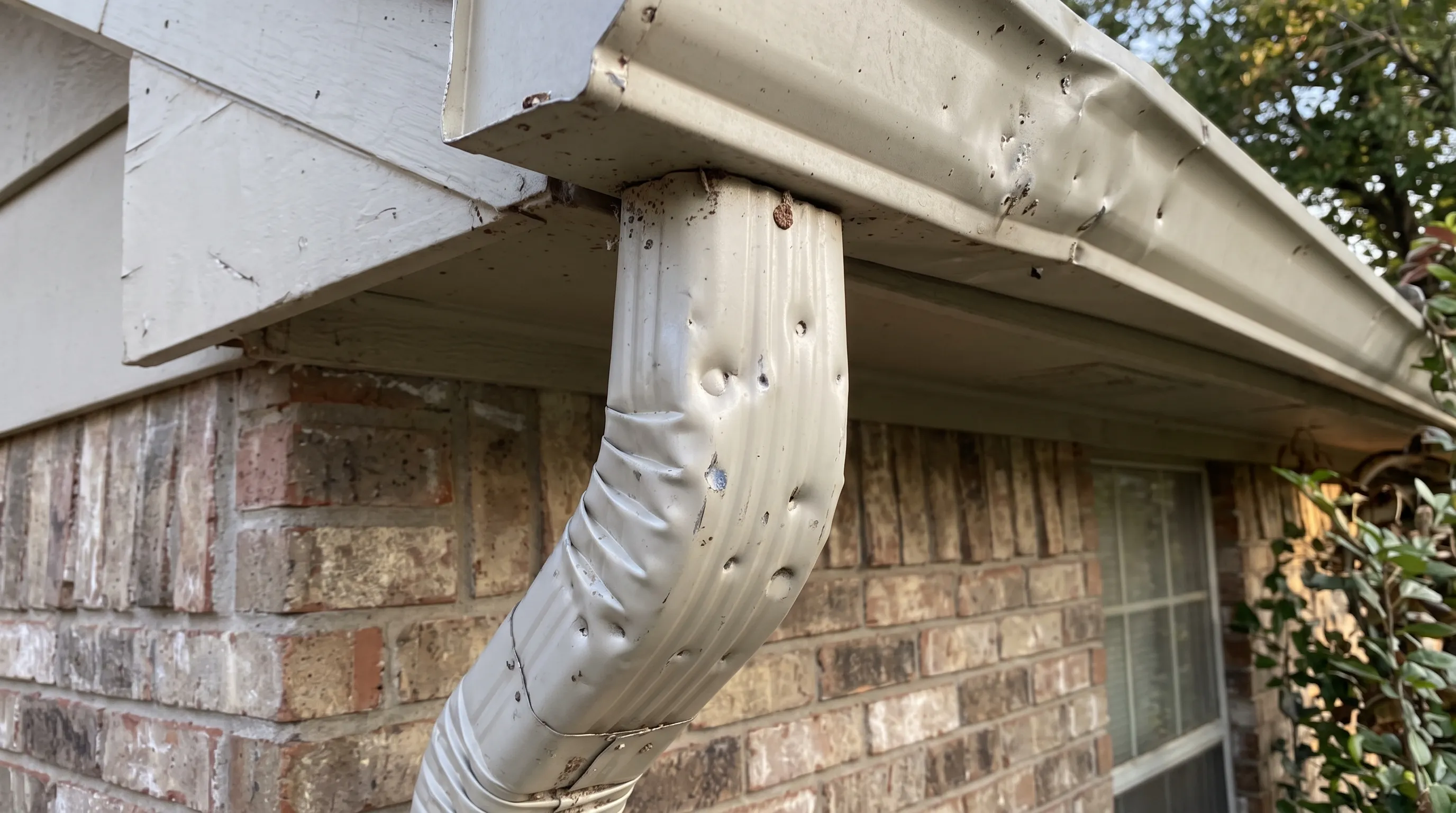
Take a moment to look at your gutters and downspouts themselves. Hail that is large enough to damage asphalt shingles will almost certainly leave dents in lightweight aluminum gutters, downspouts, and window screens. If your ground-level metals look like they have been hit with a ball-peen hammer, you can safely assume your roof took the exact same beating.
Diagnosing Damage from Inside the House
The final phase of a safe, ladder-free roof inspection happens inside your living room. The exterior of your roof might hide its damage well, but water always leaves a trail.
Walk through every room on the top floor of your home and stare at the ceiling. You are looking for faint yellow or brown rings. These water stains often start small, perhaps the size of a coffee cup, and slowly expand after every rain event. Pay close attention to the corners of rooms and the seams where the walls meet the ceiling. Peeling drywall tape or bubbling paint is a strong indicator that moisture is trapped behind the drywall.
If you have a safe, easily accessible attic, poke your head up through the hatch during the daytime. Turn off your flashlight and look for any daylight piercing through the roof decking. Light coming through means water can come through. Turn your flashlight back on and check the wooden rafters and the insulation. Black streaks on the wood or matted, compressed insulation are undeniable signs of an active leak, likely stemming from failed flashing or a blown-off shingle directly above that spot.
Understanding the Urgency and Probable Causes
To help you make sense of what you are seeing from the ground, refer to this diagnostic breakdown of common visual symptoms.
Visible Sign from Ground | Probable Cause | Urgency Level |
Shingle pieces in the yard | Severe wind uplift | High - Roof deck is likely exposed |
Creased horizontal lines on shingles | Wind folding the shingle tabs | Medium - Material is weakened and will fail |
Heavy granules at downspouts | Hail impacts or advanced aging | Medium - Protection layer is compromised |
Bent or gapping chimney flashing | Sealant failure or storm debris | High - Direct path for interior leaks |
Yellow stains on interior ceilings | Active leak through roof deck | Critical - Immediate repair needed |
The Danger of Hidden Damage
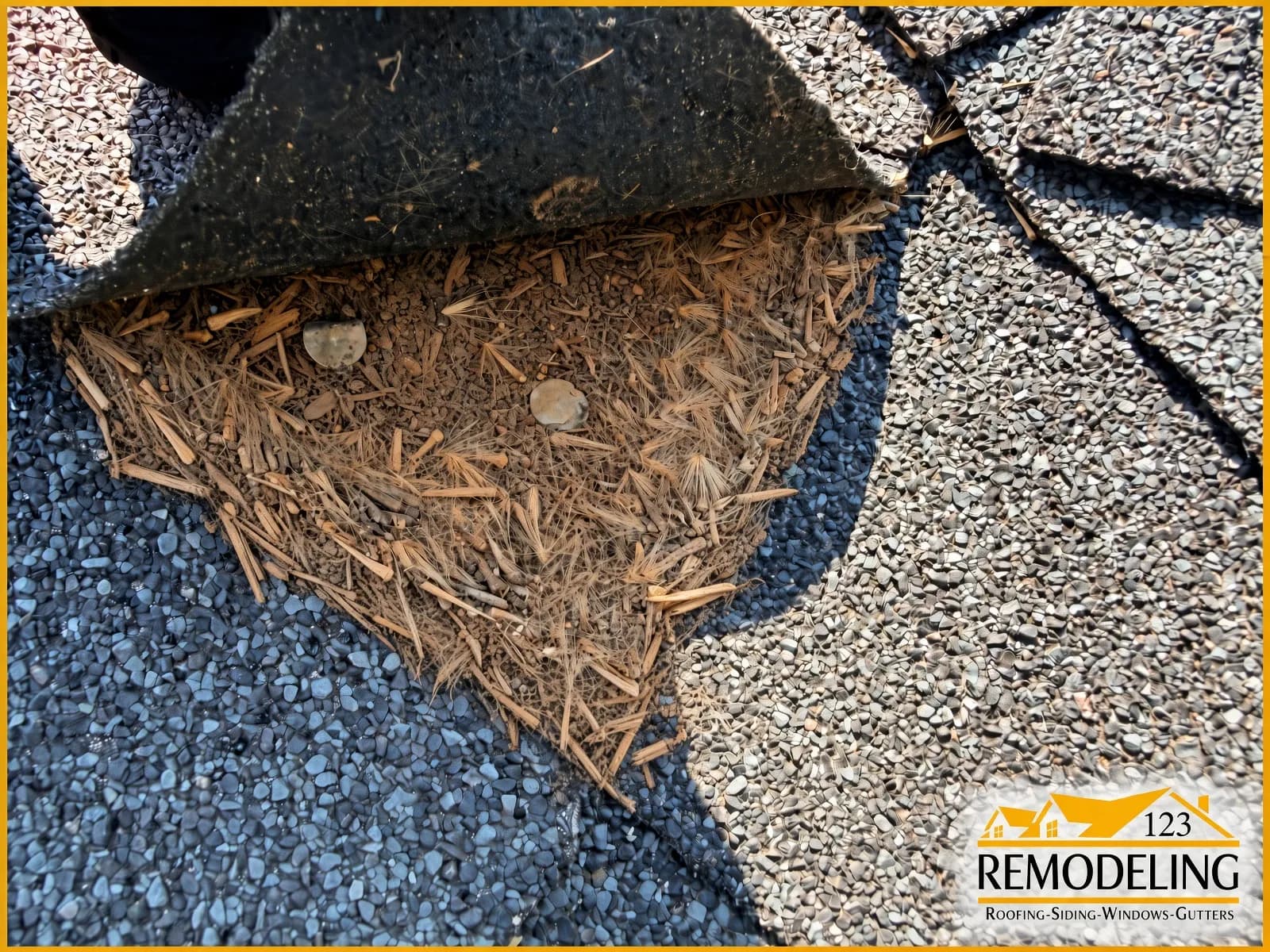
Even the most thorough ground-level inspection has limits. Binoculars can only show you the surface, but high winds and violent storms often force water and debris beneath the top layer of your roof. For example, during a severe storm cleanup in Norman, a homeowner's roof looked relatively intact from the driveway. However, upon closer professional inspection, we discovered that the sheer force of the wind had driven splintered pine branches straight under the asphalt shingles, puncturing the underlayment and resting against the roof deck. This kind of embedded debris is completely invisible from the ground but will cause massive leaks if left unchecked. A professional physical assessment is the only way to catch these hidden threats before they rot the structural wood of your home.
Navigating the Next Steps
If your ground-level sweep reveals any of these warning signs, the wait-and-see approach will only cost you more money. A few missing shingles might seem minor today, but when the next storm rolls through Yukon or Midwest City, that small weak point will catch the wind and peel back a massive section of your roof.
Furthermore, you are working against the clock. In Oklahoma, homeowners generally have a strict window to file an insurance claim for storm damage. If you ignore the signs and wait until your ceiling collapses two years from now, your insurance carrier may deny the claim due to negligence and expired filing deadlines. For a deep dive into navigating these timelines, we recommend reading our related article, The Complete 2026 Guide for OKC Homeowners.
Proper maintenance is also about getting ahead of the weather. As the seasons change, the demands on your roofing system shift dramatically. Preparing your home for dropping temperatures is just as important as recovering from spring hail. Review our Autumn Roof Checklist to ensure your home is fully prepared.
Spotting damage from the driveway gives you the power to act quickly, but it is not a substitute for a comprehensive professional evaluation. A trained eye knows how to differentiate between normal wear and tear and legitimate storm damage that warrants an insurance claim. We know how to thoroughly document every scrape, dent, and missing granule to build a solid case for your insurance adjuster.
Get a Professional Assessment.
Don't wait for a ceiling leak to tell you your roof is failing.
If you spotted uneven shingles, bent flashing, or roofing debris in your yard, it is time to call the experts. 123 Remodeling & Roofing provides thorough roof inspections across the Oklahoma City metro area.
We will find the hidden damage, show you exactly what is going on up there, and lay out clear next steps so you can make an informed decision.